👋 Hi! I'm Carmelo's AI assistant. I'm trained on his portfolio, case studies, and expertise in design and digital transformation. Ask me anything about his work, design process, or career!
This AI model is in beta and may not always be accurate.
Integrated Design Intelligence: my governance model for regulated, mission-critical software
Regulated and mission-critical products rarely fail because teams lack talent.
They fail because decisions aren’t traceable, ownership isn’t clear, and delivery isn’t governed end-to-end.
Integrated Design Intelligence is my operating model: it connects intent to execution, aligns teams across time,
and makes quality scalable—without slowing delivery.
Integrated Design Intelligence sits at the intersection of design thinking, systems thinking, and delivery governance.
It’s how I help enterprise teams turn complexity into repeatable execution—especially when software must be safe,
auditable, and consistent at scale (ERP, MES/CMMS/EAM, HMI, and mission-critical SaaS).
The outcome is practical: faster delivery with less rework, clearer decisions, and higher product quality—because the system
Why governance matters
In regulated environments, speed without governance creates hidden risk: inconsistent UI behaviour, unclear approval history,
undocumented exceptions, and implementation drift between design and code. The cost shows up later as rework, slower onboarding,
audit pain, and operational incidents.
Governance is not bureaucracy. It’s the minimum structure needed to keep delivery predictable, decisions explainable,
and quality repeatable.
The model: workflows, checkpoints, ownership
My governance model defines how work moves from intent to production. It makes responsibilities explicit,
keeps approval checkpoints lean but real, and ensures teams stay aligned even when delivery spans months.
The output isn’t “more process”—it’s fewer surprises.
Workflows that match real operations
I map how work actually happens across roles, systems, and constraints—then translate it into workflow design that supports
exceptions, approvals, and traceability.
Approval checkpoints that reduce risk
Checkpoints are explicit moments where quality is validated: UX intent, accessibility, security constraints,
edge cases, and readiness for implementation—before risk becomes expensive.
Clear ownership that removes ambiguity
I make ownership visible: who decides, who contributes, who reviews, and what “done” means.
This is how teams stop cycling on opinions and start converging on outcomes.
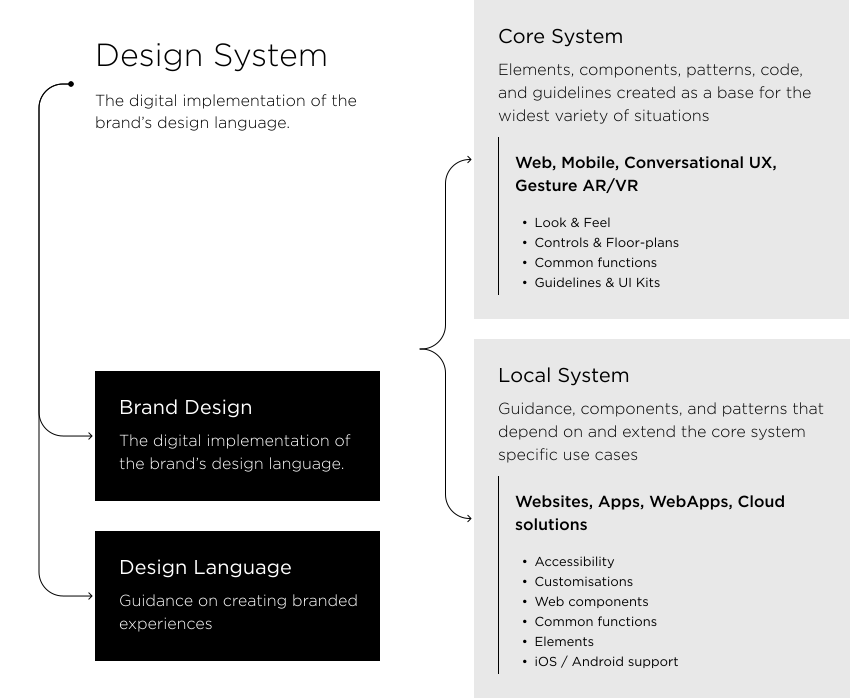
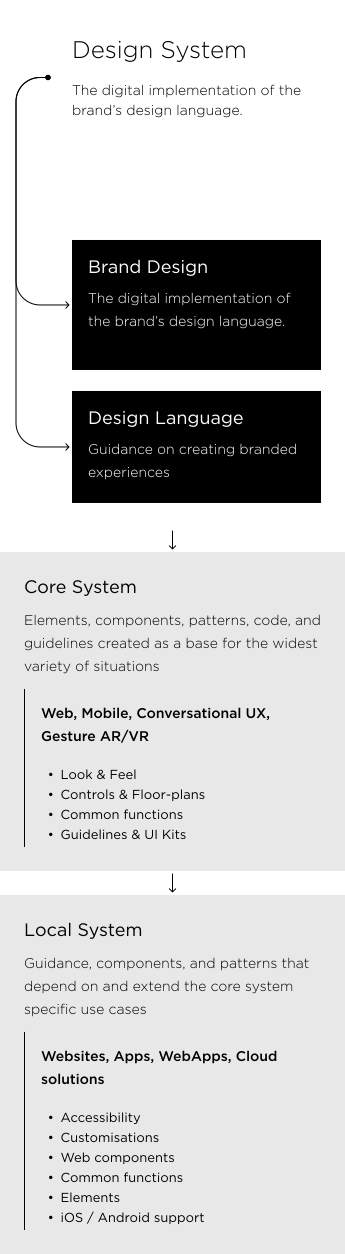
Design systems as governance
Tokens, patterns, and documented behaviour keep experiences consistent at scale.
This is where quality becomes repeatable and delivery becomes faster—because the system removes friction.
Playbacks for alignment across time
Regular playbacks keep teams aligned across functions and across weeks/months of delivery.
They protect intent, reduce rework, and anchor decisions to user and business outcomes.
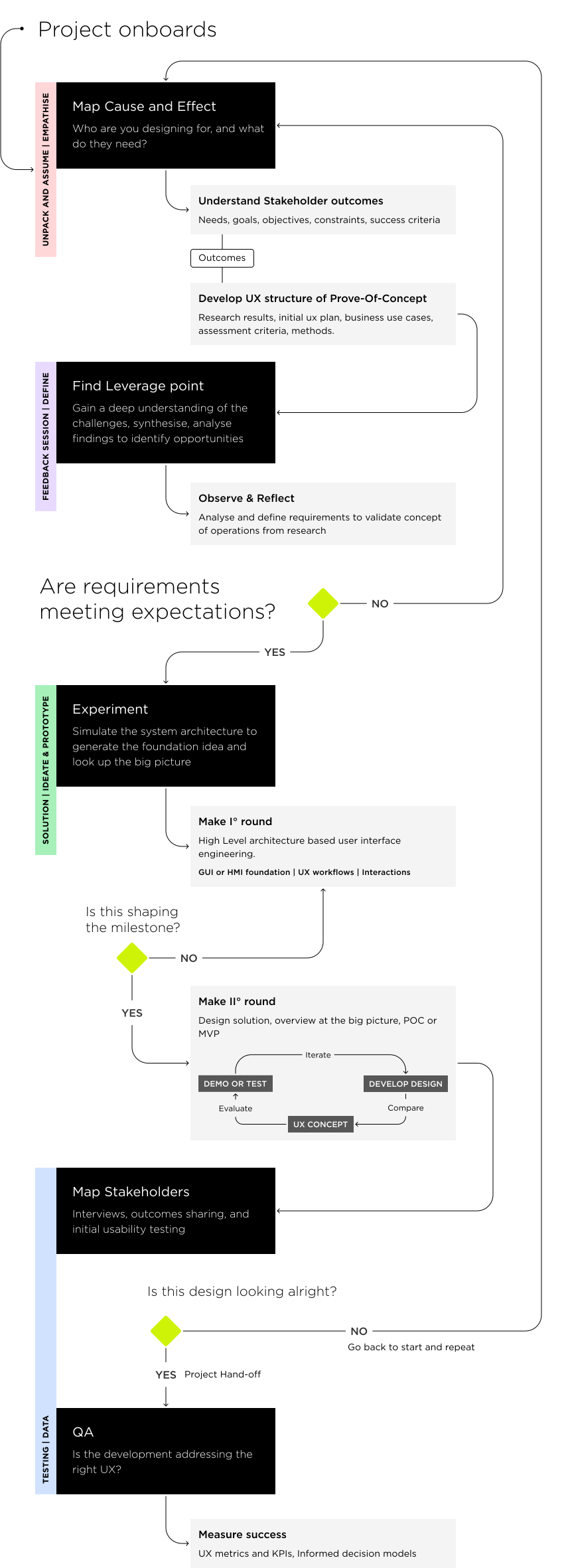
Below are the two artifacts that make this model tangible: the governance framework (how decisions and quality gates work),
and the contribution model (how ownership and collaboration stay clear over time).
Governance framework
Design isn’t just what I deliver — it’s how delivery stays governable
This framework turns strategy into execution: clear gates, clear ownership, and a shared definition of “done” across product, design, and engineering.
Contribution model
Story points as the execution engine
Governance defines how teams work. Story points define how much work can be done—predictably.
I use story points to scope design work by effort and complexity (not hours), so intake, prioritisation, and delivery stay transparent.
In practice, story points become part of the operating rhythm: requests enter through Jira, scope is made explicit, work is delivered in a steady cadence,
and playbacks keep decisions aligned across time.
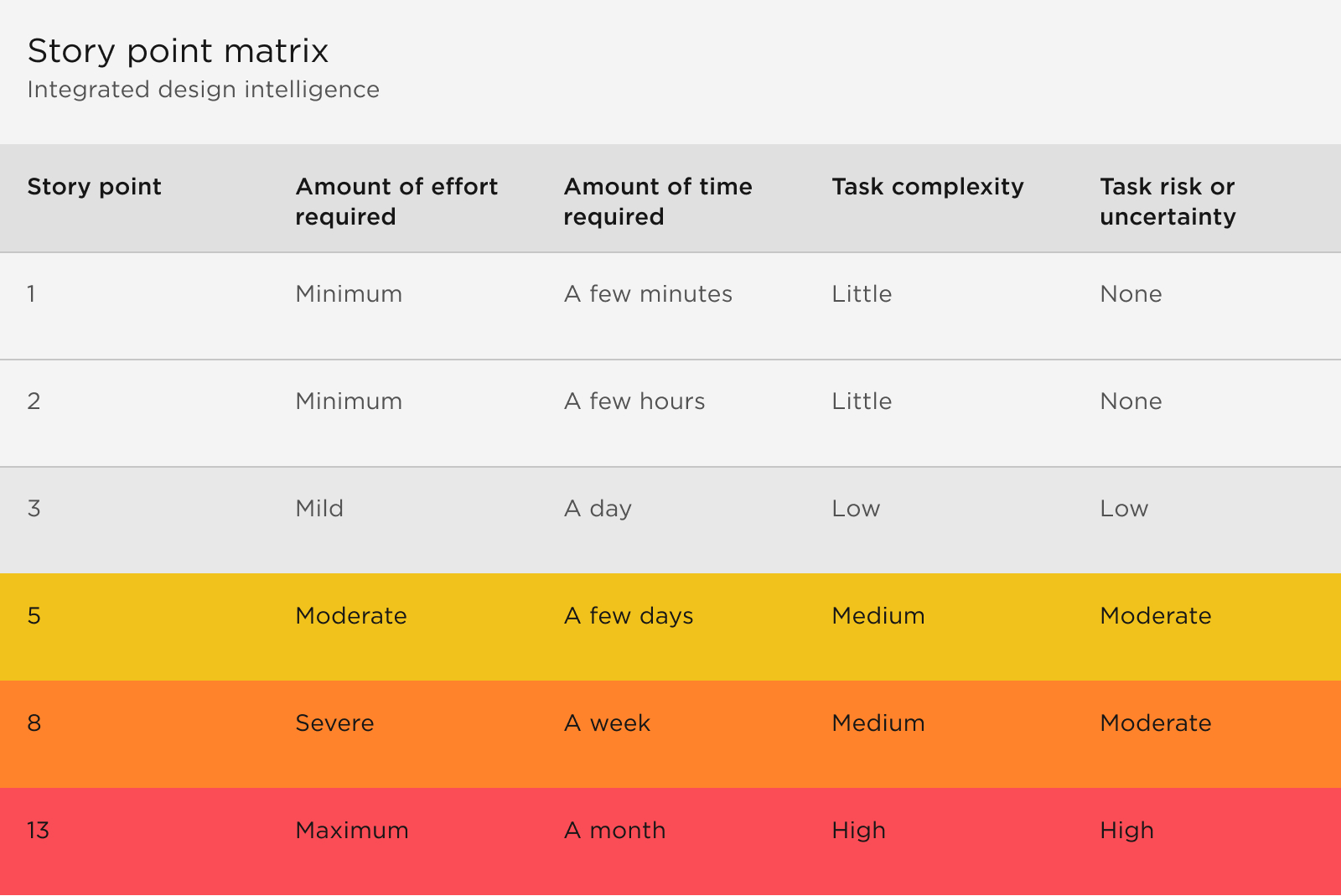
The Story Point Matrix
Story points measure effort while accounting for complexity, risk, dependencies, and uncertainty.
The matrix below is a practical reference to keep expectations aligned across design, product, and engineering.
1 point
Minimum effort and risk. Small, contained changes with no meaningful uncertainty.
2 points
Small effort. Minor changes with limited complexity and low risk.
3 points
Moderate effort. Some complexity or dependencies, but manageable risk.
5 points
Medium-sized work. Multiple states, edge cases, and coordination across stakeholders.
8 points
Large effort. Higher complexity, notable risk, and cross-team dependencies.
13 points
Maximum effort. High uncertainty, broad scope, and strong need for discovery + iteration.
Why I use story points over hourly estimation
Hourly estimates can be misleading in complex product work—especially in enterprise and regulated contexts where requirements evolve and edge cases matter.
Story points keep the conversation focused on outcomes and effort, not false precision.
They encourage better prioritisation of high-value work.
They create a shared language across product, design, and engineering.
They manage expectations: scope is explicit and delivery stays predictable.
This fits enterprise workflows: clear intake, scoped delivery, quality checkpoints, and transparency—without micromanaging time.
The value of 40 monthly story points
A monthly allocation gives clients control and flexibility. Points can be spent across a wide range of work, for example:
UX/UI delivery: flows, screens, and interaction design from low to high fidelity.
Enterprise components: reusable patterns and design system components aligned to engineering.
Workflow design: approvals, exceptions, roles, and end-to-end operational journeys.
Unused points can roll over, so the model stays fair and clients maximise value over time.
What you can measure
Integrated Design Intelligence should prove itself in outcomes. Here are the signals I track with teams:
Predictability: fewer late-stage changes and steadier delivery cadence.
Quality at scale: higher reuse, fewer UX inconsistencies, less design-to-code drift.
Decision clarity: faster convergence, clearer approvals, fewer cycles on opinions.
That’s the point: workflows, approval checkpoints, and clear ownership—powered by a delivery system that stays predictable.
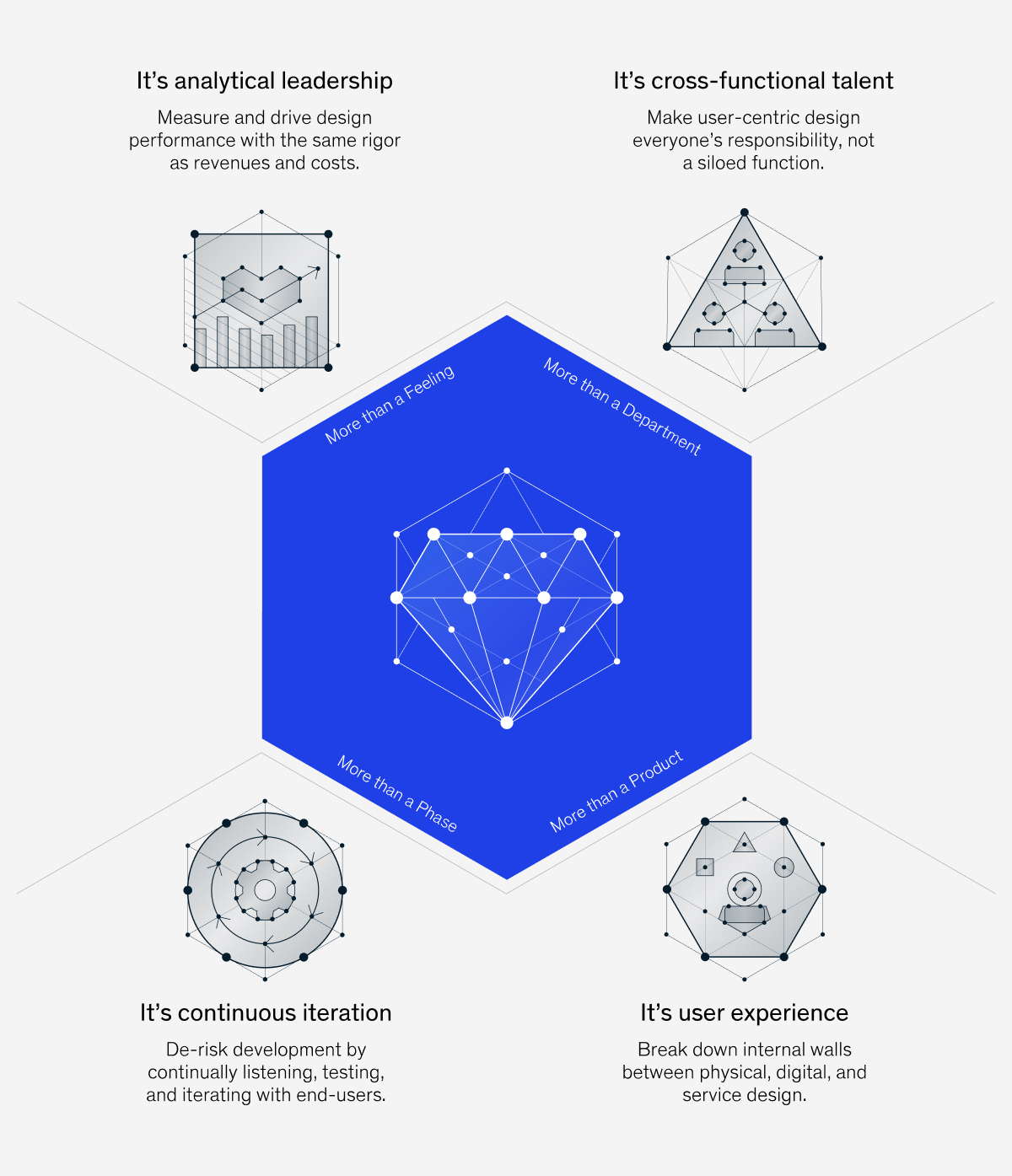
Design is more than aesthetics—it’s a competitive advantage.
As a design leader, I'm committed to making design a central pillar of my clients'
success. Let me help your organisation harness the power of design intelligence to achieve its full
potential.